

The Top 3 Concerns Clients Have Before Committing to a Remodeling Project
(And How We Address Them at Riggs Custom Builders)
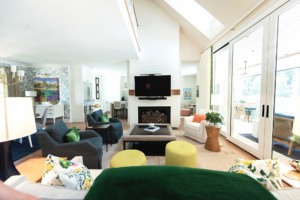
If you’ve ever stared at a major remodel estimate and felt your stomach flip, you’re not alone.
After hundreds of conversations with homeowners—across initial consultations, estimate reviews, and plan review meetings—we see the same patterns again and again. No matter the size of the project, three big questions almost always stand between a client and a confident “yes”:
1. Can we really afford this?
2. What exactly are we getting—and what might go wrong?
3. How long will our life be upside down?
In this post, we’ll unpack each of those concerns and walk through how we handle them at Riggs Custom Builders.
—————————————————————————————————————————————————–
1. “Can we really afford this?” — Budget & Financial Risk
Money is the first and loudest concern in nearly every serious project conversation.
Clients are rarely just asking, “How much does it cost?” What they’re really asking is:
- Are we about to overextend ourselves?
- What happens if costs change mid‑project?
- Do we have options if this number feels too high?
How we handle budget questions
-
Transparent, itemized estimates – We avoid the black‑box “big scary number” approach.
Instead, we break the project down into understandable pieces:
-
- Pricing per section of the job – so you can what each part of the scope of work costs
- Allowances for things like cabinetry, tile, fixtures, flooring, and lighting
- Optional upgrades vs. what’s included in a solid, well‑built baseline
When clients can see *where* the money is going, the project stops feeling like a guess and starts feeling like a plan.
-
Multiple scenarios, not a yes/no decision
It’s rarely “do the project” vs. “don’t do the project.” More often, it’s:
- Full dream scope now
- A value‑engineered version
- A phased approach (“Phase 1: kitchen and structural work; Phase 2: porch and landscaping”)
We’ll talk through tradeoffs such as:
-
- Square footage vs. finish level
- Deck vs. bonus room
- High‑end custom cabinetry vs. more budget‑friendly options
This gives clients room to say, “Here’s what fits us financially *and* still meaningfully improves our home.”
-
Candid conversations about financing and cash flow
We regularly discuss:
- How HELOCs and construction loans typically work
- Deposit and draw schedules over the life of the project
- What expenses hit when, and how that lines up with the client’s cash flow
By normalizing the financial side of remodeling, we replace anxiety with clarity—and that’s usually what people need before they can move forward.
—————————————————————————————————————————————————–
2. “What exactly are we getting?” — Scope, Unknowns, and Surprises
The second major concern is all about *scope and risk*.
Homeowners are often thinking:
- Are we solving the right problems or just making things look pretty?
- What if you open the walls and find something scary?
- Are we about to bite off more than we can chew?
Old houses, water issues, structural questions, and previous “DIY surprises” all make people understandably cautious.
How we handle scope and unknowns
-
Start with discovery, not demolition
Before we ask anyone to commit, we invest in understanding the house:
- Site visits and detailed measurements
- Scanning and drawing plans
- Bringing in structural or trade expertise when needed (for things like load‑bearing walls, foundations, or complex HVAC)
This discovery phase surfaces as many risks as possible early on, so estimates and scopes are based on reality—not wishful thinking.
-
Define clear scope boundaries
A big source of fear is “scope creep”—the sense that the project will just keep expanding.
We combat that by being very clear about:
-
- Which rooms and systems are in scope
- What exactly is included (demo, rough‑in, finishes, cleanup, etc.)
- What counts as a change order vs. normal project work
We also call out what’s *not* included: areas we’re intentionally leaving untouched, items budgeted as future phases, or issues that would only be addressed if we uncover something unexpected.
-
Be honest about unknowns and how we manage them
We never pretend that remodeling is completely risk‑free—especially in older homes.
Instead, we:
-
- Explain the most common unknowns we see (old wiring, hidden water damage, framing oddities, etc.)
- Build contingency thinking into the plan where appropriate
- Spell out the process: if we find something, we investigate, price it, present options, and get written approval before moving forward
Clients don’t expect us to control everything inside their walls. They *do* expect a clear, professional process for dealing with surprises. That’s what we commit to.
—————————————————————————————————————————————————–
3. “How long will our life be upside down?” — Timeline & Living Through Construction
Even when the money makes sense and the scope feels right, there’s one more huge question:
“What is this going to do to our day‑to‑day life?”
People want to know:
- When can we realistically start?
- How long will the project take?
- Can we live in the house while you work?
- What will it actually *feel* like to live through this?
For families with kids, remote work, pets, or tight move‑out timelines, this can be the deciding factor.
How we handle timeline and disruption
-
Give realistic ranges, not fantasy dates
We’re up‑front about:
- Lead times for cabinetry, windows, and specialty items
- The impact of permitting and HOA approvals
- How long each project phase typically takes on site
Rather than promising the earliest possible completion date, we give a realistic range and explain what could move things earlier or later. The goal is not to impress—it’s to be accurate.
-
Plan around real life, not the other way around
We actively ask about:
- School schedules and holidays
- Major life events (new babies, job changes, moves)
- Whether the family can or wants to move out during certain phases
Then we look for ways to sequence the project with those realities in mind—sometimes batching the worst disruption into a tighter window, sometimes breaking work into phases that are easier to live through.
-
Set expectations for “living through it”
If clients are staying in the home, we walk through:
- Dust control and containment strategies
- Which rooms and systems will be offline, and for how long
- Work hours, access, parking, and noise expectations
When people can picture the day‑to‑day experience, “We’ll be living in chaos forever” becomes “This will be intense for a few weeks, manageable after that, and worth it at the end.”
—————————————————————————————————————————————————–
Our Overall Approach: Clarity Before Commitment
When you zoom out across all these conversations, a clear philosophy emerges in how we guide clients through big decisions:
1. Education first, pressure last.
Our meetings are designed around questions, options, and explanations—not high‑pressure closes. The goal is for clients to understand their project deeply enough to make a confident decision.
2. Options, not ultimatums.
We don’t force an all‑or‑nothing choice. We lay out different scopes, finishes, and phases so homeowners can align the project with their finances, their house, and their season of life.
3. Process transparency.
From initial walk‑through and design, through estimate review, selections, change orders, and launch meetings, we show clients the *whole* process—not just the first step. That visibility removes a lot of the fear.
4. Respect for constraints.
Budget limits, time windows, and “we can’t move out” realities are not treated as obstacles; they’re design constraints. We build the best possible project *within* them.
At the end of the day, committing to a major remodel will always feel like a big decision. Our job at Riggs Custom Builders is to make sure it never feels like a blind one.
If you’re considering a project and these questions are keeping you up at night, you’re exactly the kind of homeowner we built this process for. Let’s talk through your concerns, put numbers and plans to them, and see what’s possible for your home. LET’S START THE CONVERSATION TODAY!